
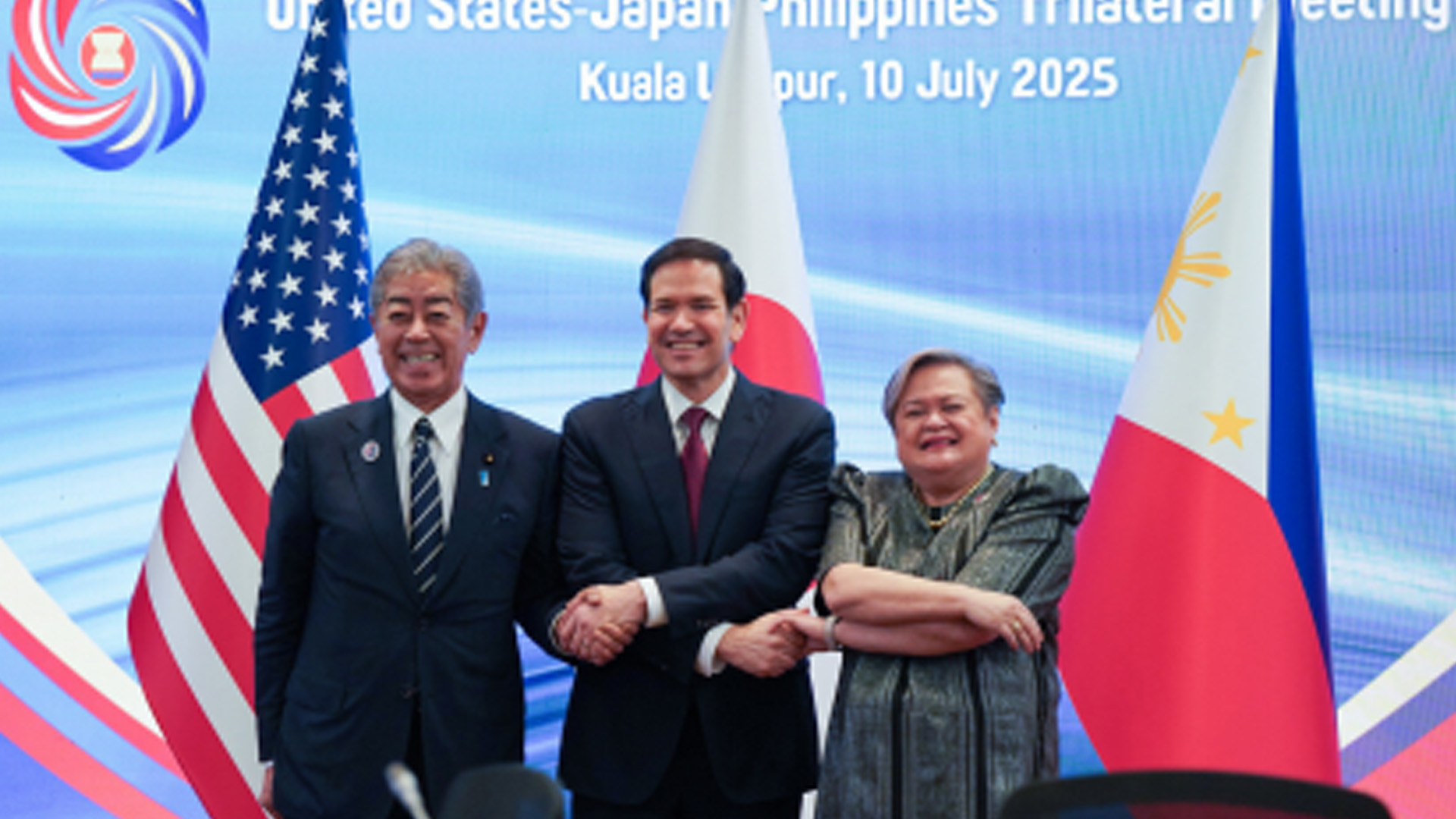







The foreign chiefs of Japan, the United States, and the Philippines have voiced opposition to unilateral attempts to change the status quo by force or coercion.
Japanese Foreign Minister Takeshi Iwaya, US Secretary of State Marco Rubio, and Philippine Foreign Affairs Secretary Theresa Lazaro shared the view as they discussed the situation in the East and South China Seas at a meeting in Kuala Lumpur on Thursday, at a time when China is stepping up hegemonic moves in the seas.
They also reconfirmed the importance of respecting the rule of law and securing the freedom of navigation.
The three-way talks took place on the sidelines of a series of meetings related to the Association of Southeast Asian Nations in the Malaysian capital.
The three ministers agreed to hold, by autumn, a meeting on maritime issues among high-ranking government officials of their countries.
They also affirmed that Japan, the US, and the Philippines will cooperate to reinforce the supply chains of key minerals and other items and work in unison in fields such as cybersecurity and civil nuclear energy.
Later Thursday, Iwaya and Rubio briefly exchanged views, including on the US’ recent decision to impose 25 percent reciprocal tariffs on imports from Japan. They agreed to continue supporting Japan-US negotiations among relevant ministers on the tariff issue. (PNA)